


 SIGN UP FOR OUR
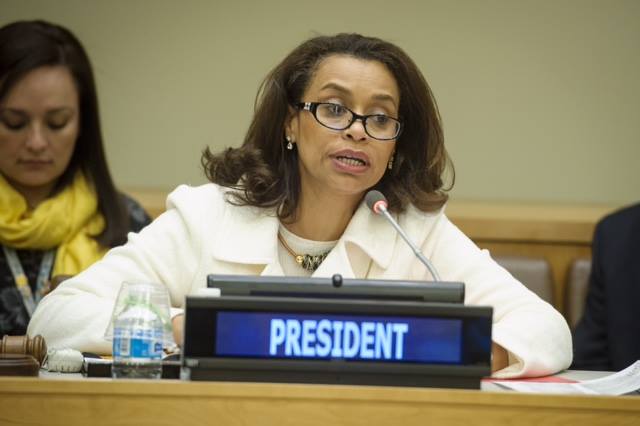
Costa Rican Elayne Whyte Gómez ambassador for the UN is presiding this year the United Nations Conference that is currently negotiating a legally binding instrument to ban nuclear weapons, leading towards their total elimination.
More than 120 countries ratified Whyte to preside the conference which is taking place in New York, USA since June 15 and will conclude July 7.
“Advocates of a ban treaty believe that nuclear weapons are incompatible with international law. First, as a consequence of their destructive power and radioactive fallout, nuclear weapons inherently violate several articles of the Geneva Conventions meant to protect the victims of international conflicts. Second, many non-nuclear weapons states and disarmament advocates believe that states possessing nuclear weapons have been unwilling to pursue good-faith negotiations mandated by the Treaty on the Non-Proliferation of Nuclear Weapons (NPT)” explains the UN website.
Currently the countries that have or are believed to have nuclear weapons include: the United States, Russia, United Kingdom, China, France, India, Pakistan, North Korea and Israel; it is estimated that between them all there are a total of 15,000 nuclear weapons, but the number of missiles ready to launch is uncertain.
Whyte explained in an interview with La Nación, that there is currently frustration in the international community because of the little advance there’s been on the nuclear disarmament process in the countries currently holding nuclear weapons; part of the reason for this has to do with the fact that in 2001 the main focus shifted towards the risks of terrorism and nuclear weapons took a back seat.
The ambassador is currently trying to weaken a block established by several countries believed to have the atomic bomb, since none of them backs the current draft. Critics of the initiative consider it to be unrealistic and with little possibilities of success without the participation of “atomic” nations.
Nikki Haley, the USA ambassador to the UN, spoke out for a group of countries that consider this is not the best moment to ban atomic weapons or promote disarmament since they believe nations such as North Korea will never respect such prohibition.
The UN website states: “The draft treaty of 22 May 2017, obligates all State Parties to the prohibition of nuclear weapons possession, development, production, transfer, use, and testing, and of assisting any other state with the same. It also prohibits States Parties from stationing another nation’s nuclear weapons on their territory.
The draft treaty does not create a verification regime. It stipulates that each State Party shall “undertake to accept safeguards” to prevent the diversion of peaceful nuclear technology for weapon purposes, and that former nuclear weapons possessing State Parties shall cooperate with the International Atomic Energy Agency (IAEA) to verify the completeness of their disarmament”.
Whyte considers this type of processes in the international community take time and are gradual, and things tend to change from one day to the next.



