


 SIGN UP FOR OUR
 Costa Rica’s public health system continues to strengthen care for mothers and newborns.

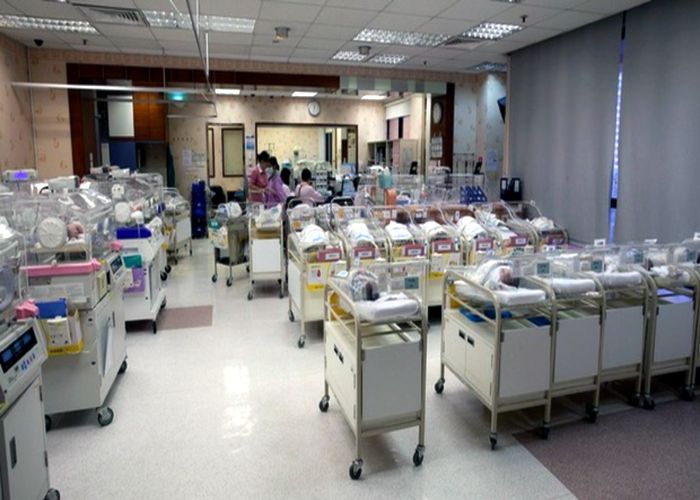
Last year, the 65,281 babies were born at Costa Rica’s public hospitals, reported the CCSS (the Costa Rican Social Security Agency, which runs the public health system). Of these, 588 were twins, and nine were triplets.
The hospitals have recently introduced screening procedures (“tamizaje” in Spanish) that used to only be available through primary health clinics for newborns to detect congenital diseases. The institutions have also focused on preventing mortality in heart surgeries, while boosting equipment and infrastructure throughout the country for maternal and newborn care, said the agency press office.
Olga Arguedas, director of the National Children’s Hospital, and Jaime Lazo, head of the neonatology department at the health facility, said they are focusing on two major causes of infant mortality: congenital heart problems and premature births.
The institution introduced the use of a technique called “pulse oximetry” which can detect cardiac problems in newborns so they can be closely monitored and corrected in a timely fashion if needed.
In addition, the 30-day post-op mortality rate for cardiac surgeries at the National Children’s Hospital declined from 8.2 percent to 1.2 percent last year due to a series of improvements made.
The largest number of deliveries was at the Max Peralta Hospital in Cartago, followed by the San Vicente de Paul Hospital in Heredia, and then at San José’s Women’s Hospital, with other hospitals attending births as well.
New beds in labor and delivery rooms were purchased at many hospitals, as were new incubators to improve the care of newborns.
The Monseñor Sanabria Hospital of Puntarenas features a newly outfitted “humanized care model for pregnancy, childbirth, pre- and post-partum care that contemplates the family’s involvement,” with sound systems, television screens, exercise areas, aromatherapy, and relaxation massage equipment.
The Calderón Guardia Hospital, adjacent to downtown San José in the Aranjuez neighborhood, on the other hand specializes in management of congenital malformations, prematurity, and pre-eclampsia, said the CCSS.
In 2016, the first fetal surgery center in Central America was started at the Calderón Guardian. Specialists at the center can treat diseases with high mortality, for example neonates with Fetus-to-Fetus transfusion syndrome.
The country’s specialized care for women at risk for or with symptoms of pre-eclampsia includes using biomarkers for early detection, and special attention during birth with highly trained staff.
Finally, Calderón Guardia’s prevention and management of premature births is unique in the country, with an innovative progesterone treatment to control prematurity for women at-risk, and special delivery rooms for such cases.
Over the last year, the hospital has assigned three doctors on the night shift in the neonatal unit to avoid overloading staff and potential delays.
This hospital also has a special collaboration with the milk bank at the San Ramón Hospital, to transport human breast milk donated mainly for premature infants.



