


 SIGN UP FOR OUR
Click image to enlarge

Editor’s note: The views expressed by guest columnists are not necessarily those of The Costa Rica Star, its advertisers, or its staff.
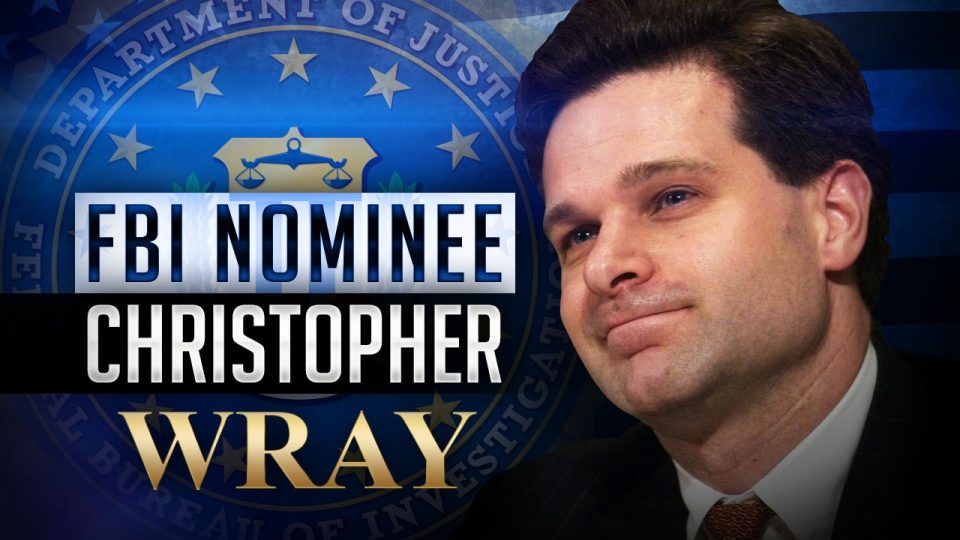
The U.S. Senate’s long-awaited Judiciary Committee hearings into President Donald Trump’s FBI nominee Christopher Wray began Wednesday morning.
Wray’s nomination is perhaps the single most important non-U.S. Supreme Court appointment President Trump will make during his administration. A full Senate vote could happen as early as the end of July.
Throughout Wray’s testimony under oath he repeatedly stressed the importance of maintaining political neutrality and independence of the Federal Bureau of Investigation from the White House or any other political entity.
“If I am given the honor of leading this agency, I will never allow the FBI’s work to be driven by anything other than the facts, the law, and the impartial pursuit of justice. Period. Full stop,” he told senators Wednesday. “My loyalty is to the Constitution and the rule of law.”
Wray’s nomination comes on the heels of President Trump’s recent firing of former FBI Director James Comey who became embroiled in political controversy when he decided not to bring changes against Hillary Clinton and her use of a private email server she kept in her home in New York while she was U.S. Secretary of State during President Obama’s first term.
Comey should have presented his case against Clinton to then U.S. Attorney General Loretta Lynch, but he decided against that preferring to make that decision himself and declaring it on national TV during a press conference Comey himself requested. In doing so he took away Lynch’s constitutional authority to make such a decision. Comey cited Lynch’s controversial meeting between her and former President Bill Clinton that took place on Lynch’s airplane as a reason that tainted Lynch’s decision making ability when it came to anything related to the Clintons. Comey overstepped his authority as FBI director and that’s the primary reason Comey was fired by President Trump. The FBI investigates crimes and presents their evidence to the U.S. Attorney General for prosecution. That’s how the system is supposed to work.
At no time during Wray’s testimony was he asked if he would reopen the case against Clinton. None of the senators on the Judiciary Committee dared go there. Wray should have been asked if there was any chance he would reopen the investigation into Clinton’s emails, but he wasn’t.
Following Comey’s departure former FBI Director Robert Mueller was appointed by Deputy U.S. Attorney General Rod Rosenstein to take over Comey’s FBI investigation into any collusion between Russian influences and President Trump’s campaign team during last year’s election in which Clinton lost and Trump won.
At this point Wray, 50, a former U.S. Department of Justice prosecutor, is sure to be confirmed. He received bi-partisan support from Republicans and Democrats all but assuring his confirmation.
“I view him as the consummate straight shooter and somebody I have enormous respect for, and I would be pleased to do what I can to support him in his mission,” Wray said in response to questions about Mueller’s present role at the FBI and Mueller’s independence from outside influences.
“I would consider an effort to tamper with Director Mueller’s investigation to be unacceptable and inappropriate, and to be dealt with sternly and appropriately indeed … I don’t consider Mueller’s probe a witch hunt.”
President Trump on numerous occasions has characterized Mueller’s Russian-Trump election investigation a “witch hunt.”
Rosenstein was brought to the forefront of the FBI’s Russian-Trump campaign connections when President Trump’s Attorney General Jeff Sessions recused himself from investigations into any campaign-related issues because Sessions, then a U.S. Senator from Alabama, had participated in Trump’s campaign for president soon after Trump announced his candidacy. Sessions was the first U.S. Senator to endorse Trump and in return Sessions became the U.S. Attorney General replacing Lynch who was appointed by former President Obama.
In an interesting exchange between Sen. Patrick Leahy (D-VT) and Wray, Leahy asked Wray if at any time during his nomination if any pledge of loyalty to the president was requested.
“Nobody asked me for any kind of loyalty oath during this process and I sure as heck wouldn’t give one if asked,” Wray answered in further restating his independence from the White House.
Leahy also asked Wray if anyone high up in Trump’s administration including the president himself would ever ask Wray to do anything illegal would he comply. “First I would try to talk him out of it, and if that failed, I would resign.”
Wray’s apparent integrity and devotion to the rule of law and the U.S. Constitution repeatedly surfaced during the day-long hearing. He also said that crimes based on bigotry or prejudice “can’t be tolerated.”
Keeping the FBI out of politics and maintaining the expected level of impartiality with all of their investigations — including Mueller’s Russia probe — will not be easy. It would be well within Wray’s discretion to reopen the FBI’s concluded investigation into Clinton’s handling of classified information and follow the facts where they lead in following the rule of law. Comey didn’t.
About the Author
Britt Nelson relocated to Costa Rica in 2011 from Florida, where he served as news editor for the Palatka Daily News, a newspaper owned by the New York Times Regional Newspaper Group (NYT-RNG) for 20 years.
Nelson served the NYT-RNG for 18 years in Tennessee, Kentucky, Virginia, North Carolina and Florida as a correspondent, reporter, staff writer, senior staff writer training new reporters, copy editor, page designer, editorial writer, editorial page editor and editorial board member.



