


 SIGN UP FOR OUR
 By Wendy Anders
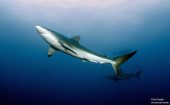
Photo courtesy of MarViva.
Silky sharks, thresher sharks and giant devil rays were voted to be included in Appendix II of the Convention on International Trade in Endangered Species of Wild Fauna and Flora (CITES) yesterday during the 17th convention conference in South Africa.
Appendix II includes species that are not necessarily threatened with extinction, but whose international trade must be controlled to ensure the recovery of their populations. The inclusion of a species in this appendix requires countries to increase protective measures so that the species do not face increased risks to their survival, said MarViva, a non-profit marine conservation organization based in Costa Rica.
Costa Rica is a signatory nation to CITES, an international treaty designed to prevent trade that threatens the extinction of wildlife.
Populations of silky shark (Carcharhinus falciformis) have been significantly reduced by between 70 and 90 percent throughout their territory, according to data from 2002 and 2013. This species accounts for about 70 percent of the Costa Rican shark catch fleet, and is considered globally a near-threatened species by the International Union for Conservation of Nature (IUCN).
The silky shark is a primary predator commonly caught by the longline fishing industry, both intentionally and unintentionally. Their populations are highly sensitive to overfishing and have a very slow recovery capacity, stated MarViva.
The three species of thresher sharks (Alopias sp.) now protected under CITES are classified as vulnerable by the IUCN due to observed decreases of 70 – 80 percent in their populations globally. The decline is caused by both intentional overfishing and bycatch. The meat of thresher sharks is generally considered low value; the main reason for their capture is marketing their fins.
Similarly, giant devil rays are threatened by overfishing due to bycatch, most of which is not documented or regulated. These species are highly sensitive to exploitation because their populations are small and fragmented. IUCN considers the rays to be near-threatened and vulnerable, said MarViva.
Costa Rica was noted for abstaining from voting to include the silky shark in Appendix II of CITES. However Costa Rica did vote for the inclusion of thresher sharks and devil rays, reported MarViva.
“We congratulate the countries participating in the CITES for voting to strengthen management measures for these vulnerable species. This is an important step to ensure the recovery of these populations and improve international controls. We welcome Costa Rica’s support for the inclusion of threshers and rays, although we regret the government’s decision to abstain during the vote on silky sharks,” said Jorge A. Jimenez, CEO of MarViva.



