


 SIGN UP FOR OUR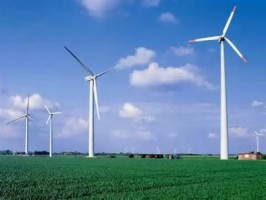
Source: Wikimedia Commons
The Co-Op for Rural Electrification in Guanacaste, known as CoopeGuanacaste, recently signed an agreement with the Costa Rican Institute of Electricity (Spanish initials: ICE) that guarantees investment in, and development of, clean energy projects such as wind farms and hydroelectric plants. The agreement also calls for research into other renewable energy sources in the most prosperous province of Costa Rica.
In 2013, the electrical grid coverage in Costa Rica reached 99.6 percent of households, which makes this country the most electrified in Latin America. By virtual of her riparian geography, Costa Rica also manages to produce nearly 80 percent of clean electricity from hydroelectric plants.
Guanacaste currently leads the way in research and development of clean energy projects. In a few years, wind turbine farms in the province will surpass the electrical generation currently achieved in the Central Valley. This province also has agreements in place with Japan for the development of a geothermal energy research station, as well as hydrogen fuel plant operated by the aerospace firm Ad Astra Rocket Company of Houston and Liberia. A massive solar energy power plant is also undergoing development at this time.
The agreement recently signed by CoopeGuanacaste appeals to the goals of both the province of Guanacaste and ICE. Immediate projects will be based on hydroelectric plants and wind power generation, but future research and development will look into more opportunities to generate solar, wind, geothermic, and wave energy projects.
Wave and tidal power is of particular interest to engineers and researchers in Guanacaste due to the miles of coastline and constant wind. This geographic and natural advantage of Guanacaste is already making it the surfing and kite boarding capital of Costa Rica, and in the future this advantage may extend to generating electricity.
Source: Fiorella Valle of Primero en Noticias, Guancaste



