


 SIGN UP FOR OUR
  Even though statistics and public opinion surveys indicate that the administration of former President Laura Chinchilla was able to make good on the campaign promise of a safer Costa Rica, uncomfortable news reports about crimes against persons and property are prompting both Ticos and expats in Guanacaste and other affluent parts of the country to weigh their options with regard to firearms.
Gun culture was practically non-existent in Costa Rica until the turn of the century. Even before the armed forces were abolished, firearms were mostly in the purview of those authorized by the government to carry them. Hunting for subsistence has mostly favored trapping and ensnaring, and even hunting for sport is prohibited in Costa Rica. In Guanacaste and other rural areas of the country, the most common self-defense weapon has been the machete.
Although there is considerable law enforcement and legislative interest in gun control, the numbers of firearm enthusiasts in Costa Rica are growing despite a recent drop in gun sales. Whereas in the past a few gun shops and shooting ranges were almost exclusively found in the Central Valley, Guanacaste has been welcoming elements of gun culture over the last few years.
Gun lovers who live in the beaches of the Gold Coast no longer have to travel outside of the province to empty rounds into paper targets that are not likely to fight back. In Costa Rica, shooting ranges are called poligonos (polygons), and there is one near Playas del Coco, across from the Pali supermarket in Sardinal. This range is called Los Pochotes, and as of December 2013 the base range fee was 5,000 per day (about $10). As with many ranges in Costa Rica, Los Pochotes has firearms available for rental, mostly revolvers and semiautomatic pistols.
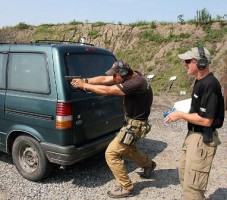
Guanacaste residents interested in legally arming themselves can fulfill all the requirements at APSP, a tactical shooting academy that conducts the behavioral, knowledge and hands-on testing necessary to pack heat in Costa Rica. This academy is located in Huacas on the way to Matapalo, 150 meters west from the Super Compro grocery store, on the second floor of the Yiree shopping center. The hands-on firearm training portion costs 30,000 colones and involves firing 50 rounds at the ProShooter Tactical range, located 4 kilometers west of the Santa Rosa crossroads on the way to Finca Guatemala.
APSP routinely trains and certifies security guards in weapons training. The cost of the behavioral screening is 35,000 colones; the same cost applies to the firearms knowledge and hands-on training. Expats interested in carrying firearms in Costa Rica must be residents and have a clean criminal background.



