


 SIGN UP FOR OUR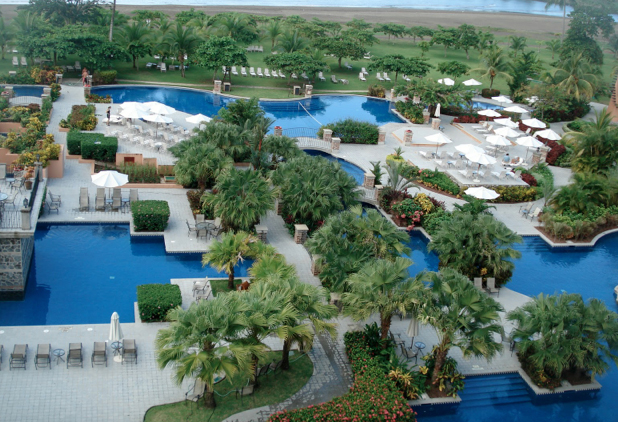
Scaling is hard. Really hard. As we have seen with the recent speed bumps at highfliers like Groupon and Zynga, taking “lean startups” from foundation to creating sustainable, scalable, profitable business models is a very rare and special task. So I’m highlighting a few companies outside of the Google/Amazon/Facebook pantheon that have built large, sustainable, profitable business models at scale.
Recently, I wrote about Akamai, a company with strong network effects that successfully transitioned from a single product to build a platform that garners over a billion dollars in revenue and is now a core part of the Internet’s fabric. In comparison, TripAdvisor is more of a classic consumer Internet success story, but with even more powerful network effects and an amazing business model. Magical, really. It may be one of the most fascinating companies I know. This is a company that took $4 million of invested capital to build a company now worth over $4 billion.
TripAdvisor’s History: Two Big Pivots
Founded in 2000 by Stephen Kaufer and Langley Steinert, Boston-based TripAdvisor is a travel website that provides reviews and other information for consumers about travel destinations around the world. The company is now pervasive – with 65 million unique visitors each month scouring the site for reviews of hotels, restaurants and sites around the globe. I remember last year settling into the booth of a café deep in the rainforest in Costa Rica and looking up to see a placard on the table begging for a positive TripAdvisor review.
Chatting with CEO and cofounder Kaufer recently, I was reminded of the fact that the company started with a very different business model in mind. In founding TripAdvisor, Kaufer wanted to take his hard core engineering skills and apply them to vertical search in travel. That is, build a massive database of travel information that provided a white label search engine for travel sites like Expedia and Travelocity. Big Data meets travel…in 2000.
Kaufer described to me with some chagrin what happened – after a year and a half, he had no clients and no revenue and was running out of money. Then, 9/11 hit and the travel industry was decimated. Kaufer began to despair that his fledging start-up would go under. Fortunately, on the side, the company had built up TripAdvisor.com as a demo site to show the prospective clients what a vertical search engine could do. When he saw TripAdvisor.com start to pick up traffic, he decided to pursue an online advertising based business model with banner ads. “Going B2C was daunting and not in our core DNA,” Kaufer remarked. But testing hypotheses was very much in the company’s DNA, as well as evaluating data to learn and adjust. TripAdvisor, in effect, was a model lean start-up with an engineering-driven, product-focused founder.
After a few weeks of watching no click throughs, Kaufer executed his second pivot: a cost per click model (now known as CPC). Every time a consumer clicked on a hotel to book a room, TripAdvisor would charge the hotel something. Suddenly, everything began to (literally) click. Three months into launching the new model, TripAdvisor was earning $70k per month and achieved breakeven. The company has grown profitably ever since. Kaufer originally hired editors to comb the Web for great travel articles and link to them, and then allowed users to post their own reviews on the site as a whim. When the company saw that user reviews were getting all the traffic, they adjusted to focus on user reviews, such that fresh, authentic content was always available and didn’t cost the company any money to produce.
TripAdvisor And Expedia: From $4 million invested to $4 billion in value
With these adjustments, TripAdvisor grew rapidly and successfully. The company agreed to be acquired by Expedia/IAC in 2004 for $210 million in cash, a huge win for all, particularly given their amazing capital efficiency: they had only raised $4 million in venture capital. Under Expedia, TripAdvisor continued to flourish and grow – they would feature Expedia’s ads on their site and reap the revenue benefit when users clicked on those ads. Expedia grew to account for roughly one third of the company’s revenues. In December 2011, Expedia felt it wasn’t getting full economic credit for TripAdvisor buried within its financials and so spun TripAdvisor out as an independent company, where it now trades on the NASDAQ with a $4.8 billion market capitalization as of this writing.
Scaling Lesson 1: Focus On Finding A Great Business Model
After some searching, TripAdvisor found a magical business model, representing social media and user-generated content at its best. Content is free and supplied by consumers who write reviews voluntarily. These consumers allow this content and their own engagement to be monetized without asking for anything in return. Customer acquisition is driven mainly through natural search thanks to the huge volume of great content and long history and brilliant manipulation of Google’s search algorithm. Advertisers are brought to the site and driven mainly through self-service channels, so there is no need for a large sales force or account management team. As a result, gross margins are very high at 98% (not a typo!) and EBITDA margins are 47%. Think about that. For every dollar of revenue, the company is able to drop nearly half to the bottom line. I’m not sure the Mafia could do better. In the hyper-competitive world of technology and consumer Internet, it is hard to find a company that is pound for pound as profitable as TripAdvisor.
TripAdvisor is a classic example of a network-effect business and a reminder of how financially attractive network effect businesses can become at scale. There are three sides to the network: the consumer, the venue and the advertiser. The network becomes more valuable as it grows to each party – with more consumers providing more interesting content, more venues providing more access to vacation options and more advertisers offering deals and convenient bookings. This virtuous cycle has fueled its growth nicely and allowed the company to drive very efficient value. The chart below shows their financial performance over the last few years, with forecasted 2012 revenue of $767M and EBITDA of $339M. At its current 20-25% revenue growth rate, TripAdvisor will reach the billion dollar revenue club in 2014. The $4.8B market cap is 6x revenue and 13x EBITDA, so not insane multiples on a comparable basis.
Please visit Harvard Business Review to continue reading this very detailed article and graphs.



