


 SIGN UP FOR OUR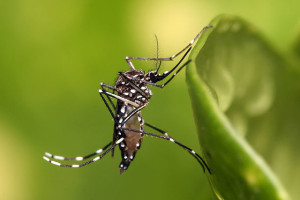
Aedes aegypti mosquito, known dengue carrier.
In Costa Rica and other countries located in the tropics and subtropics, advisories related to dengue fever are typically issued around this time each year. For this 2013 rainy season, however, Minister of Health Daisy Corrales has added some alarming statistics to go along with her annual advisory:
- There have been three recent deaths due to dengue hemorrhagic fever in Costa Rica.
- There have been 17 confirmed cases of dengue hemorrhagic fever, mostly in the Central and Southern Pacific regions as well as in communities south of the Central Valley.
- The World Health Organization has reported a 250 percent increase of dengue instances around the world.
- Dengue fever, which is not as lethal as the hemorrhagic strain, has been reported in 12,000 cases thus far in 2013.
The three victims who lost their lives due to complications related to dengue hemorrhagic fever lived in Orotina, Playa Herradura and Chomes of Puntarenas. The Health Ministry has deployed workers across Costa Rica to eradicate any standing water hazards where the Aedes aegypti mosquito is known to propagate.
In 2012, The Costa Rica Star reported on the efforts of Minister Corrales to eliminate potential mosquito breeding grounds. She even traveled to the Caribbean region, pulled up her blouse sleeves and picked up discarded tires where mosquitoes can often be found. This year the alert carries a little more urgency.
Dengue is not a true seasonal disease; it is a pure vector-borne disease, which means that carrier mosquitoes can breed and strike at any time of the year. Although there is no vaccine against dengue, getting infected just once provides considerable immunity against future infections. Papaya seeds have been reported to be a natural remedy for those infected with dengue.
If you develop a fever about four to seven days after being exposed to mosquito bites in Costa Rica, there is a chance that dengue fever could develop. Symptoms include sinus-like headaches, high temperatures, body aches, skin rashes, and slight nosebleeds; children infected by dengue may suffer diarrhea and vomiting as well.
The key to avoiding dengue hemorrhagic fever, besides mosquito eradication, is early intervention. Costa Rica has a high number of dengue fever cases each year, but the lowest mortality rate in Central America despite its high levels of rainfall that produce countless pools of standing water in areas of thick vegetation -just about anywhere in the country.
Source: SINART CR



