


 SIGN UP FOR OUR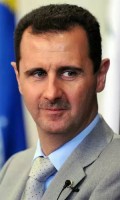
Syrian President Bashar al-Assad. Source: Wikimedia Commons
Costa Rica and Syria are separated by more than 7,500 miles (as the crow flies). There are more than just oceans and continents separating the two nations; there is a broad sociopolitical chasm between the two nations. Syria does not keep a diplomatic mission in Costa Rica and viceversa. Still, Costa Rica has come forward with her opinion on the deadly and protracted conflict in Syria.
On September 4th, 2013, the Wall Street Journal reported that United States President Barack Obama asserted the right to an Executive Decision to deliver a military airstrike over Syria without approval from the U.S. Congress. This is exactly the type of action that former President of Costa Rica Oscar Arias recently warned his fellow Nobel Peace Laureate about; effectively comparing it to the “unilateral invasion of Iraq” under former President George W. Bush.
What former President Oscar Arias is concerned about is that even strategic airstrikes would not be effective in removing the cancer of Syria, despotic President Bashar al-Assad. The world is awaiting on further statements by the United Nations with regard to the use of chemical weapons against the rebel uprising in his country. Former President Arias has underscored the importance of getting the Arab League involved in removing President al-Assad from power; it is definitely in their best interest since they do not want the cancer from spreading to their own nations.
Some have questioned whether Costa Rica should have a say in the Syrian conflict at all, particularly on the eve of military intervention; after all, what does a country without a military know about modern armed conflict?
Writing for the Christian Science Monitor last year, Jackie Briski explained that:
“Costa Rica has moral authority to speak on issues of authoritarian violence in Syria.
The representative of Costa Rica [before the United Nations] expressed his delegation’s deepest concern about the gruesome human rights violations being carried out in Syria. The international community could not remain silent, he stressed, calling on the Syrian authorities to definitively end attacks against civilians and other human rights violations. Condemning reports of sexual violence, including that perpetrated against girls and boys, he said all international stakeholders should work towards a swift and peaceful solution to the crisis, in line with the Arab League’s Plan of Action.
Given that the UN resolution on Syria did not call for use of force (neither arming the rebels nor attacking the al-Assad regime directly), but rather supported the Arab League’s plan for a peaceful transition, it makes sense that Costa Rica would support the resolution so boldly.”
On August 22nd, Costa Rica’s Ministry of Foreign Affairs issued a statement on the eve of the arrival of the United Nations investigative team looking into reports of chemical weapons used by President al-Assad’s regime:
“Costa Rica urges all parties in Syria to act moderately and to avoid the path that leads to the downward spiral of violence. The Government of Costa Rica urgently calls for a cease of hostilities, calling for abstinence instead of attacks or sanctions that will aggravate or deteriorate the situation further.
As a country that defends peace and international human rights, Costa Rica vehemently calls on all parties to abide by the rules and principles of international law and to ensure that the population [of Syria] has access to humanitarian aid”
The average person in Costa Rica may not fully understand the background of the conflict in Syria, but they certainly thank God and their lucky stars that the country’s style of unarmed governance and utmost respect for peaceful conflict resolution will continue to provide them with peace and freedom.



