


 SIGN UP FOR OUR
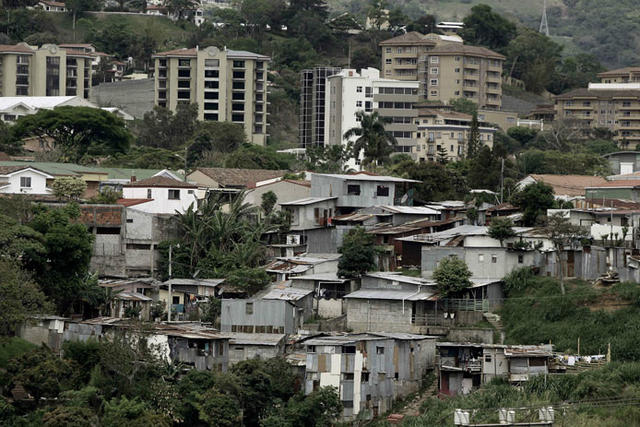
Costa Rica has grown in the past decades in many areas, foreign investment being one of them, tourism being another; it has strong human development indicators which makes it one of the most stable countries in the region, it is also considered one of the happiest countries in the world.
Yet, in addition to the complicated fiscal crisis it is currently facing, inequality is also one of the most pressing problems Costa Rica has to deal with.
The 2016 Gini Index of Wealth Distribution puts it in the top 10 of countries with more inequality.
Unemployment went from 9.1% in the first trimester of 2017 to 10.3% in the same period of 2018; while the level of poverty has remained almost the same for the past 20 years, only showing a shy decrease during the Solis administration, “according to data from the National Household Survey of the National Institute of Statistics and Census, the percentage of poor households in Costa Rica went from 20.5 to 20 percent between 2016 and 2017, which is not a significant change; while extreme poverty dropped from 6.3 percent to 5.7 percent”, details the country overview by the World Bank. This means there are close to 1.1 million Costa Ricans living in poverty.
The 22nd Edition of the State of the Nation states: “In the present century Costa Rica has seen inequality grow in the distribution of income, in a Latin American context that is progressing in the opposite direction”.
“In 2015, the average disposable income of the 10% richest households was 32 times higher than that of the poorest 10% (up from 27 times in 2010), much higher than the OECD average of 9.6 times”, explains the OECD, and continues “labor income inequality, in turn, is driven by low labor force participation and high levels of unemployment and informality which in Costa Rica are increasingly concentrated among low income groups – even more than in other Latin American countries. Also, in contrast to other countries the public sector contributes to income inequality as the public-private sector wage gap is large”.
The coastal zones and communities near the borders show the most inequality, with the consequences of lower economic prosperity, environmental sustainability and social progress in relation to the central region.



