


 SIGN UP FOR OUR
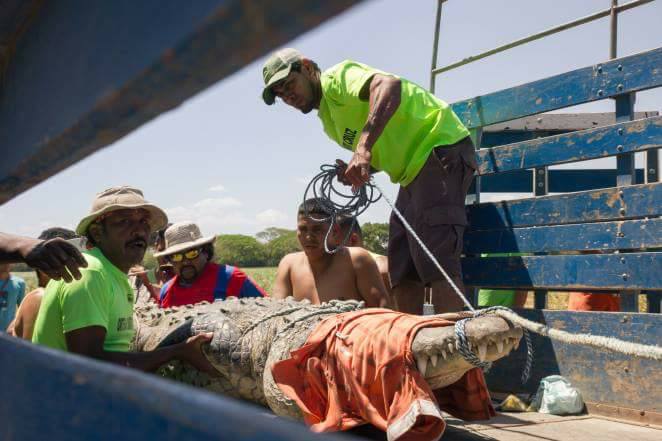
Ortega de Balsón is a small town in Santa Cruz de Guanacaste, it is famous in Costa Rica because they have a tradition that has been celebrated every year on Good Friday ( Easter) for at least 200 years called “la lagarteada”; this phrase cannot be properly translated, but the activity consists on a group of people jumping into a croc infested river capturing a live crocodile, preferably the largest in the area, (which locals refer to as lagarto), and taking it to the local plaza where the animal is exhibited for a day in a cage created for this purpose; the animal is liberated the following day in the same place it was caught.
According to the Ministry of Culture of Costa Rica, it is believed activity started upon the arrival of Spanish conquerors to the country, when indigenous people of the Chorotega tribe were the main inhabitants of the area. This tribe considered crocodiles as a magical animal with special powers. It is also thought that the capture of the animal on Good Friday symbolized the acceptance of the tribe of the religious traditions being imposed by the Spanish conquerors, capturing a sacred animal on this day was symbolic with the sacrifice of Jesus Christ, it is said in the past the animal was killed on Sunday using its meat for human consumption, its fat for medicinal purposes and its skin to create different articles.
The Ministry of Environment has been giving its approval for the celebration of this activity for years, and supervising that the animal doesn’t get hurt and is liberated accordingly, the activity is, of course, very dangerous, this year a man ended up with a bite on his leg and had to be taken to the hospital.
However,controversy rose this weekend after the animal captured, a female 3.7 meters long, died in the early hours of Saturday; authorities state the death could have been caused by stress.
It is the first time this supervised activity ends with the death of the crocodile; organizers of the event were saddened by the passing of the animal since they consider them a symbol of their culture and town.
“Due to what happened, it is important that we reconsider the convenience of allowing this activity in the future, although in the past it has been permitted due to its cultural value and a resolution of the Constitutional Chamber (Sala IV) of the Supreme Court, from the bioethics standpoint and considering the benefit of the animals it is unacceptable, also considering the Wildlife Conservation Law”, concluded Francisco Ramos, administrator of the Cipancí wildlife refugee.



