


 SIGN UP FOR OUR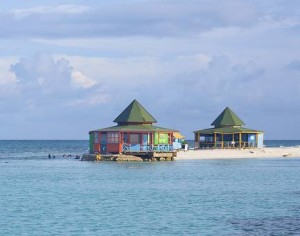
Idyllic San Andres
The long-running border conflict between Costa Rica and Nicaragua goes back several centuries, and it is currently being deliberated at both the International Court of Justice at The Hague and the Central American Court of Justice. The latest volley of accusations from both nations are centered on the infamous Google Maps invasion of Isla Calero by former guerrilla commander Eden Pastora and a number of Nicaraguan security forces back in 2011.
Costa Rica, however, is not the only country that Nicaragua has a sovereignty issue against. At the International Court of Justice (ICJ) in the Netherlands today, representatives from Colombia will appear before that tribunal to defend the South American nation’s position on a sovereign conflict arising from a claim to 50,000 square kilometers of the Caribbean Sea.
Colombia’s arguments date back to 1928, with the historic Esguerra- Bárcenas treaty that determined the international borders of the archipelago of San Andres, Providencia and Santa Catalina. These islands attract thousands of pleasure seekers and eco-tourists each year, and they are treasured jewels of Colombia’s heritage.
During the Sandinista power grab of the 1980s, Nicaragua initiated sovereign claims over some of the island territories of the San Andres archipelago. The conflict escalated to the ICJ back in 2001, and in 2007 the Court ruled in favor of Colombia by ratifying the validity of the treaty. The only matter that was not settled back then was the maritime border, and in December of 2011, the conflict flared up once again.
The sovereignty conflict in question does not pertain to San Andres or the major islands, but rather the following cays (or keys): Quitasueño, Roncador, Serrana, and Serranilla -as well as the maritime demarcation surrounding them. There is a lot at stake; the area is rich in natural and mineral resources, to wit: oil, fishing, tourism, and shipping lanes. Colombia has not tapped into these resources, however, since UNESCO‘s declaration of the region as a Biosphere Reserve.
Nicaragua has already claimed some of the waters in the region by sending out oil exploration ships to the area. Costa Rica and Honduras would also be affected by the outcome of this claim since both countries are committed to protecting the Biosphere Reserve along with Colombia.
Oral arguments at the ICJ will last until May 4th, with a ruling expected six months later. Should the ruling favor Nicaragua, Colombian navy ships would be forced to terminate their patrols around the 82nd meridian west. There is also the matter of geopolitics, as the Hugo Chavez regime in Venezuela is siding with his counterpart in Nicaragua, Daniel Ortega. An alliance between these two administrations may seek aggressive exploitation of resources in the Biosphere Reserve and increased deployment of maritime security forces to the region.
Source: Vanguardia (Colombia)



