


 SIGN UP FOR OUR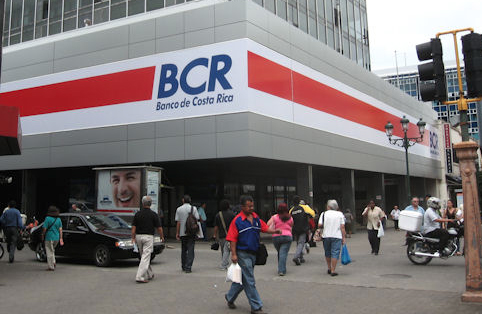
(Archive/CRS)
The Organization for Economic Cooperation and Development (OECD) is urging Costa Rica’s banking regulator known as SUGEF to make the results of tests of the country’s banks that measure their ability to cope with crisis, known as “stress tests,” available to the public.
SUGEF periodically conducts stress tests on the country’s banks, but the results of the tests are not made public.
Costa Rica regulators argue that there is a prohibition in the Organic Law of the Central Bank that prevents them from making such information public and that the results of such tests could be “misinterpreted” by the general public.
The OECD, however, argues that the results of banking stress tests should be made public in accordance with the international regulatory framework for banks known as Basel III, a comprehensive set of reform measures developed by the Basel Committee on Banking Supervision to strengthen the regulation, supervision and risk management of the banking sector.
The first version of Basel III was published in late 2009 after the international financial crisis and gave banks approximately three years to satisfy all requirements.
Costa Rica agreed to the measures as part of its incorporation into the OECD, but still maintains its policy of not disclosing the results of banking stress tests.
Finance executives and experts in Costa Rica, meanwhile, appear to be split on the issue.
Financial analyst, Andres Volio agrees with the OECD that the results of the stress tests should be made public. “SUGEF constantly evaluates [the banks], but reserves the results, even in cases of financial institutions in trouble, allowing customers to continue to invest blindly,” Volio told the daily La Nacion.
Meanwhile, former banking executive Gerardo Corrales argues that the general public does not have the proper knowledge to interpret the results of banking stress tests, which could result in a run on deposits and, in turn, an economic crisis.
The OECD is also recommending that Costa Rica establish a deposit guarantee system covering all of the country’s banks, something akin to the FDIC in the United States.
The OECD is an international economic organization of 34 member countries, founded in 1961 to stimulate economic progress and world trade, identify good practices, and promote the market economy.



