


 SIGN UP FOR OUR



First quarter employment data for 2017 shows a steady unemployment rate of 9.1 percent. On the other hand, the rate of underemployment dropped by 2.8 points compared to the first quarter of 2016, said the National Statistics and Census Institute (INEC), meaning more people moved into jobs with greater hours and/or into different job positions.
The Institute’s Continuous Employment Survey (ECE, its initials in Spanish) found roughly 2.06 million people are employed, for a national employment rate of 54 percent. The total workforce in Costa Rica is estimated at 2.27 million people.
There with an increase of 68 thousand employed persons in relation to the same period (January-March) in 2016. But this did not affect the overall employment rate figures which stand at 68 percent for men and 39.9 percent for women.
Transport and storage, and education and health, in that order were the sectors experiencing the largest increases in employment, in both urban and rural areas of the country.
About 76 percent of the total employed population is salaried, which is similar to 2016. Independent workers, on the other hand, at 449 thousand people, experienced a significant increase of 35 thousand additions in the first three months of the year. These independent workers are largely urban and male, reported the INEC.
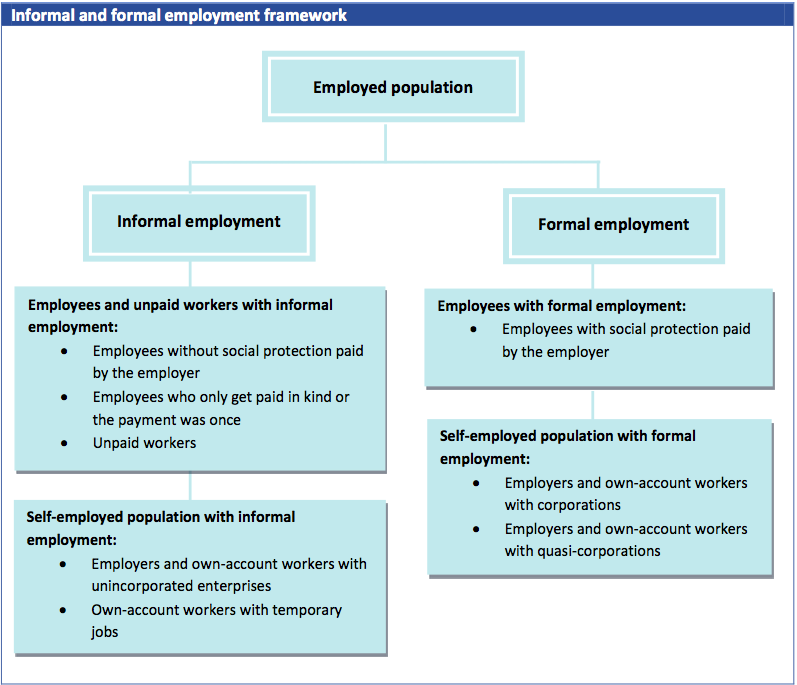
A worrying trend continues in the area of informal employment which grew 1.8 points over 2016’s first quarter. A full 43.2 percent, or 891 thousand people (of which 551 thousand are men and 340 thousand women) in Costa Rica are engaged in informal work.
Over half a million of informal workers reported working for an employer, institution or company, but in an informal capacity. Stated differently, this means that over one-third of workers hired by somebody or some agency in Costa Rica work in an informal capacity, so most likely receive little or no benefits.
Finally, first quarter employment data shows that 386,000 of the country’s informal workers are classified as self-employed.



