


 SIGN UP FOR OUR
 By Wendy Anders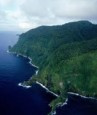
A successful fundraising campaign by the Costa Rica Forever Association, a local non-profit conservation agency that supports the country’s conservation areas and national park system, netted $230,000, allowing the group to purchase a much-needed patrol boat, and create a fund for the boat’s maintenance, said Zdenka Piskulich, the group’s executive director, in a press statement.
The boat, which can accommodates four crew members and eight passengers, will be used by the Cocos Island rangers for monitoring and surveillance to protect the national park.
The fundraising campaign ran between April and July 2015, with support by national television stations, La Nación newspaper, and ICE-Kolbi. The campaign raised funds from 23 private companies and thousands of individual donors in Costa Rica to support surveillance in the Cocos Island national park.
A radar was installed on Cocos Island in 2013 to detect movements in the area, and the boat will allow rangers to respond to the information they receive from the radar, said Piskulich.
Cocos Island is 24 km2 land mass located in the Pacific Ocean some 532 kms from Costa Rica’s mainland. The park’s protected marine ecosystems encompass 1,997 km2, for a radius of 12 nautical miles (22 kms) around the island.
Declared a national park in 1978, in 1997 UNESCO named Cocos Island as a World Natural Heritage Site, and in 1998 it was declared a wetland of international importance under the Ramsar Convention.
The waters surrounding Cocos Island are habitat for hammerhead sharks (up to 42 individuals per hectare), white-tipped sharks, yellowfin tuna, parrot fish, manta rays, and mackerel, said Costa Rica Forever.
The boat, an Eduardoño 320 patrol boat, measures 32 feet, has a range of up to 300 kilometers and can reach a top speed of 40 knots, said Piskulich.
The vessel is specifically designed for maritime interception operations. It is equipped with two 200HP outboard engines, a marine radar, radio communication, two GPS units, electronic maps, three high performance marine batteries, and a search light, said Costa Rica Forever.
Alejandra Villalobos, executive director of the Friends of Cocos Island Foundation (FAICO, in Spanish), who helped lead the fundraising effort, noted that “the remoteness of Cocos Island makes it hard to do control and protection work. This situation, coupled with the limited staff on the island and the lack of resources complicates surveillance; hence the importance of this boat, to be named the Hammerhead, for the park rangers.”



