


 SIGN UP FOR OUR
 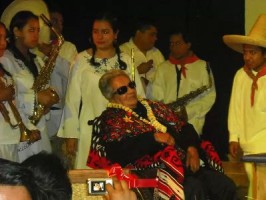 The ashes of one of Mexico’s most cherished singers will be spread among the sand, ocean and pleasant breeze of Playas del Coco, province of Guanacaste. Isabel Vargas Lizano, better known as “The Voice of Mexico” or Chavela, passed away on August 5th, 2012. Part of her ashes have already been spread in the surf off Veracruz, a Mexican coastal town that Chavela loved as much as her native Costa Rica.
According to an article by Fiorela Valle of online news site Primero en Noticias, Chavela’s ashes are currently in the custody of one of the nieces of the legendary singer. Mr. Pablo Barahona represents Chavela’s estate and plans to hold a ceremony in honor of the dearly departed and her surviving family in Costa Rica. A few months ago, the family announced that it had created the Chavela Vargas Foundation for Cultural Preservation, which will work towards paying tribute to the memory of this amazing vocalist.
A previous article in the Costa Rica Star explained a bit about Chavela’s life:
“[…] born during the first quarter of the 20th century in San Joaquin de Flores, a coffee-growing region of Heredia that former President Oscar Arias Sanchez calls home. When she was 17 years old, Chavela Vargas left Costa Rica for Mexico, a country where she would not only find fame and glory, but also the deep respect and love of the Mexican people.”
Chavela began singing in the mid-1950s, and she left Mexico at some point for a stint in Cuba. She adopted a poem, La Macorina, which deals with the life of Maria Calvo Nodarse, the first woman to be given a driver’s license in Cuba at the turn of the 20th century. La Macorina was legendary in Havana due to her intoxicating beauty and femme fatale ways. This legend inspired Chavela Vargas deeply; her first hit song was initially censored in Mexico, which lead to its adoption as a battle anthem for guerilla factions in Latin America. La Macorina was sung by rebels, freedom fighters, and later drug traffickers as they traversed the Central American jungles armed with defective Kalashnikovs.
Aside from being the Queen of Rancheras, Chavela was known as woman who wore pants and who seduced painter Frida Kahlo. She did not conform to sexual or gender roles; this attitude would be deplored by the Mexican highfalutin class, but Chavela could have cared less because she never sung for them. She sang from the heart for the working-class people she admired.
The Chavela Vargas Foundation for Cultural Preservation hopes to build a mausoleum in Costa Rica by next year. The mausoleum will probably be located in San Joaquin de Flores.



