


 SIGN UP FOR OUR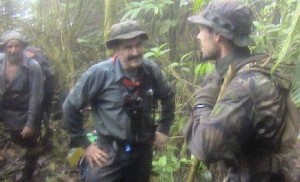
Geologist Wilfredo Rojas with Capt. Haller of the Argentinian Air Force during Operation Hope II
A team of searchers and scientists from Costa Rica and Argentina will once again look for evidence of the crash of the TC-48, one of the most intriguing unsolved mysteries in the history of aviation. The events surrounding the tragic flight of the TC-48 were covered in greater length in a previous article by The Costa Rica Star.
On November 3rd of 1965, a military aircraft from the Argentinian Air Force carrying 68 airmen experienced damage in one of its engines and plunged into the jungle of the indigenous Talamanca region of Costa Rica. More than 45 years later, the mystery of what really happened to the crew and passengers of that unfortunate flight remains.
The team will be directed by renowned Tico geologist Wilfredo Rojas, along with scientists and military search and rescue experts from Argentina. One member of the team trained in the Andes. The new stage of the search is part of Operativo Esperanza (Operation Hope), a mission commissioned by the Argentinian Air Force, which is now on its third attempt.
The Interest of a Future Geologist
For geologist Wilfredo Rojas, finding evidence of the TC-48 crash -or the remains of the Argentinian airmen- will culminate a project he has been involved in since 1975, when he was still in high school. Back then, one of Mr. Rojas’ teachers handed him information and documents about the TC-48 disappearance. Those reports planted the seed of scientific inquiry in the young man who would become one of Costa Rica’s finest geologists. In 2002, Mr. Rojas presented a very detailed report about his findings and empirical evidence surrounding the TC-48. He is positive that it crashed in the Talamanca mountains and that remains were dispersed throughout the jungle.
The murky events surrounding the disappearance of the TC-48 occurred during the backdrop of the Cold War, a time when cloak-and-dagger affairs and cover-ups were commonplace. Surviving families of the 68 Argentinian airmen have suspected the initial conclusions of American and Argentinian Air Force authorities of the TC-48 crashing into the Caribbean. The maintenance records of the TC-48 were sketchy, and allegations of evidence planting and suppression by the Argentinian Air Force clouded the investigation in the mid-1960s.
Operation Hope III
The third stage of Operativo Esperanza will begin in the inhospitable Fila de Matama on the northern region of the Talamanca Mountain Range. The maximum altitude in that region is 2,000 meters, and it is overshadowed by the imposing Mount Chirripo. The topography of the area will certainly challenge the searchers. This is a very green and desolate region. The thick, rolling jungle is crisscrossed by many creeks that form the large Estrella and Banano rivers.
If there is someone who can find the TC-48, it would be Mr. Rojas. After all, he actually found a volcano in 2008 when he was searching for evidence of seismic faults in San Carlos. Mr. Rojas found the Porvenir stratovolcano on foot and without advanced instrumentation, a unique finding in the 21st century.
The surviving relatives of the TC-48 airmen and Mr. Rojas are not the only ones invested in this search. Internet researchers in Argentina, Costa Rica and Honduras have conducted extensive inquiry over the years, and will more than likely follow Operativo Esperanza III at the following forums:
Source: Periodico Los Andes, Argentina



