


 SIGN UP FOR OUR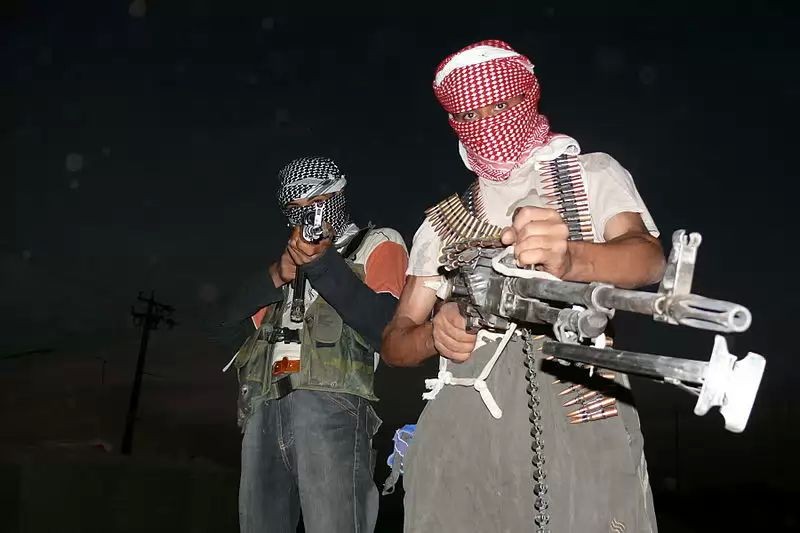
ISIS fighters in Iraq. (Wikimedia Commons)
By Katherine Gypson
WASHINGTON (VOA) Counterterrorism experts in Germany and other countries are studying tens of thousands of data files allegedly stolen from the Islamic State group, said to contain detailed personal information about terrorist recruits.
Britain’s Sky News said it acquired the information from a disillusioned Islamic State defector who told a reporter in Turkey that he stole a memory stick from the head of Islamic State’s internal security. The files are believed to hold information about more than 22,000 of the group’s members, recruits and sympathizers.
Germany’s interior minister, Thomas de Maiziere, said the revelation could help track down militants wherever they are working and lead to their prosecution.
Potential ‘goldmine’
Reports from Britain, Germany and Syria say the files contain information about jihadists from 51 countries, including 23 questions Islamic State recruits must answer before they can be accepted as members of the extremist organization.
Sky News quoted a former counter-terrorism chief of Britain’s MI-6 Secret Intelligence Service, Richard Barrett, who said the stolen IS files appear to be “an absolute gold mine of information of enormous significance.”
Not all analysts are convinced the files are genuine, but if they are, they could help identify potential attackers and the networks of sympathizers that support them, and provide government investigators with insights into the terror group’s structure and plans.
A spokeswoman for British Prime Minister David Cameron, using an alternative name for Islamic State, told reporters Thursday: “What’s important now is that the authorities can look at how this information can be used in the fight against Daesh. And if it can, then we welcome that.”
A spokesman for Germany’s Federal Criminal Police told The Associated Press, “We believe there is a high probability that these documents are genuine.”
The stolen IS files came from a man calling himself Abu Hamed, a former member of the Free Syrian Army who switched his allegiance to Islamic State, then turned away from the terror group because, he said, it had departed from Islamist values.
Those who have seen the stolen data say much of it consists of enrollment forms with the names of Islamic State recruits, their supporters, telephone numbers and addresses and other information including their particular skills and personal references.
The recruits also were required to list their marital status, blood type and education level as well as “previous jihad experience” and their preferences for future jobs, either as fighter or suicide attacker (“martyr”).
One Australian recruit is said to have written that he was willing to be a suicide attacker but that his short-sightedness and limited driving skills might be a factor. Another recruit who wrote that he suffered from severe headaches offered his services for an immediate suicide mission.
Even before the full significance of the IS files is understood, analysts said the data could reveal information about the group’s past and present fighters, and also shape the campaign against the extremist group.
US reaction
U.S. Army Colonel Steve Warren, spokesman for the U.S.-led coalition against the Islamic State, said the information could identify and track down IS’s foreign fighter networks.
Warren told the AP he was not able to verify the documents, but that he hoped they would be widely available to law-enforcement agencies.
“This would allow the law enforcement apparatus across the world to become much more engaged and begin to help do what we can to stem this flow of foreign fighters,” Warren said. “So we’re hopeful that it’s accurate, and if so, we certainly plan to do everything we can to help.”
Some terrorism experts who urged caution about the IS files said they appear to contain inconsistencies and unusual phrasing, and possibly were forgeries.
A Syrian opposition website, Zaman al-Wasl, also said there were many repetitions in the files it had been able to examine.



