


 SIGN UP FOR OUR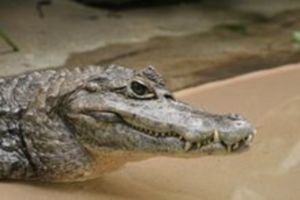
Source: Wikimedia Commons
In Santa Cruz, province of Guanacaste, residents of the small town of Ortega will spend a significant portion of Good Friday pursuing a member of the Alligatoridae family of species. To this end, members of the community got together on Palm Sunday to start construction of a large artificial pond where they will keep the cayman for several hours before taking it back to its habitat. This annual tradition, which dates back to pre-Columbian times, has been forced to adjust to the 21st century.
Located in the district of Bolson, the small agricultural town of Ortega is part of the ancestral Chorotega territory. These native Costa Ricans descended from the Nahua people and came from Cholula in Mexico. Their culture exhibits both Azteca and Maya traits, and the annual “Lagarteada” cayman hunt festival is one of the few traditions that survives to this very day, albeit considerably amended.
According to a recent news report by Marco Leandro of daily tabloid Diario Extra, residents of Ortega learned about the Lagarteada through archeology and oral history and decided to preserve it. In Costa Rica, ancient painted Chorotega pottery colorfully depicts the events surrounding the lagarteada, which are as follows:
- All residents of Ortega who are able to participate must wake up very early on Good Friday and get together for a cayman hunt.
- The large hunting party will walk several kilometers to locate the cayman, which has been previously tracked by scouts. The bigger the cayman, the better the experience.
- Scouts lead the group to the riverbank or cave where the chosen cayman lives. Everyone must pitch to catch the reptile with ropes, nets and sticks.
- By order of the Ministry of the Environment, the cayman must not be hurt during its capture. Once the cayman has been roped and tied, the hunters will take turns helping to carry it to the village where a Ministry-approved pond awaits.
- The trapped cayman will spend a day on display. Tourists take photos and anthropologists take notes before the gator is returned to the wild the Saturday before Easter.
In the past, the cayman was slaughtered and its fatty tissue shared among neighbors who used it as an antibiotic and as a remedy for bronchitis. These days, however, the lagarteada emphasizes that both caymans and indigenous traditions must be protected in Costa Rica.



