


 SIGN UP FOR OUR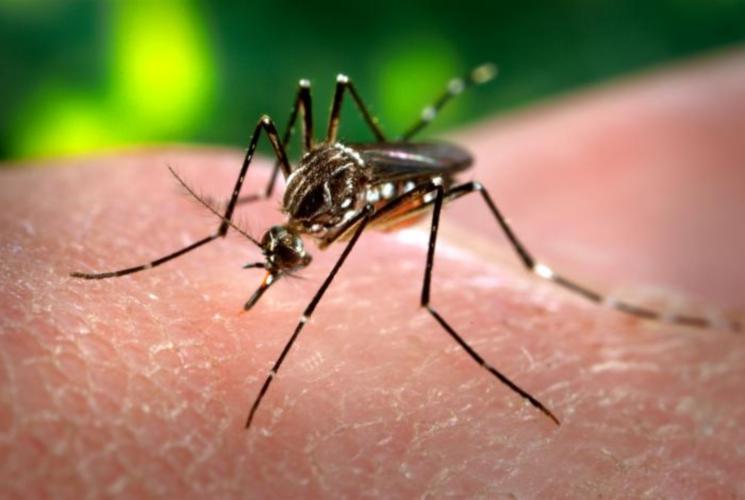
Zika is spread by the Aedes aegyptie mosquito (Wikimedia Commons)
A tourist from the United States fell ill with the Zika virus after visiting Costa Rica, according to the U.S. Centers for Disease Control (CDC) and Costa Rican health officials, who are investigating what could be the first case of indigenous transmission of the virus in the country. The announcement was made by the Minister of Health, Fernando Llorca Monday afternoon.
According to health authorities, the tourist traveled to a yoga retreat in Nosara, Guanacaste, in late December. The tourist later fell ill after returning to the United States, and tested positive for the virus in mid-January. The CDC alerted Costa Rican health authorities on January 29th.
Since the alert, health authorities in Nosara have spent the last three days spraying insecticides in a “full sweep” of the community to eliminate breeding grounds of the Aedes aegypti mosquito, which spreads Zika virus as well as dengue and chikungunya.
Health authorities are continuing to investigate the case in order to definitively determine if the tourist contracted the virus in Costa Rica or if the individual could have contracted the virus elsewhere. The case would be the first incident of indigenous (domestic) transmission of the virus in Costa Rica.
Imported cases of Zika
While this case would be the first incident of indigenous transmission of Zika in the country, there have already been two confirmed cases of “imported” Zika in Costa Rica, both of which were confirmed last week.
The first imported case was reported last Tuesday when a 25-year-old Costa Rican man arrived home from a trip to Colombia, where he is believed to have contracted the mosquito-borne virus. The man had already begun suffering symptoms while in Colombia.
The second imported case was confirmed on Friday in a man who arrived from Honduras.
Zika declared International Public Health Emergency
While Zika symptoms are generally mild and less acute than dengue or chikungunya – in most cases hospitalization is not even necessary – the virus has been linked to microcephaly in babies born to infected mothers, causing babies to be born with unusually small heads and brains leading to severe developmental problems.
The virus has been rapidly sweeping throughout the Americas, forcing the World Health Organization to declare the virus an international health emergency on Monday.
Officials estimate that as many as four million people could become infected.
Costa Rica health officials plan to deploy bacteria in fight against Zika
Meanwhile, Costa Rica’s Ministry of Health has said it plans to use a bacterium, known as Saccharopolyspora spinosa, in the fight against Zika-spreading Aedes mosquitos.
The bacterium secretes spinosad, a natural pesticide consisting of spinosyn A and spinosyn D and which kills mosquito larvae in 48 hours, according to Costa Rican health officials.
According to the National Insitutes of Health (NIH) in the United States, the bacterium has no toxic effect on humans.
The bacterium is applied in tablet form to standing water where mosquitos are believed to be reproducing. The tablets can also be used in potable water tanks and storage facilities.
While the bacterium is effective in destroying mosquito larvae, it is not effective on adult mosquitoes, according to Costa Rica health officials.
In a statement, Costa Rica’s Ministry of Health described the bacterium as “the best choice in biological technology to control [mosquito] larvae available in the market,” adding that a single application can control breeding for 10 weeks, even with water circulation rates of up to 80 percent.



