


 SIGN UP FOR OUR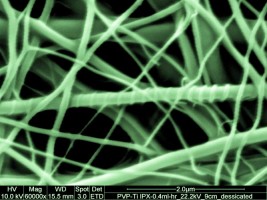
Wikimedia Commons
Aparecida, Brazil, Mar 28 (EFE).– Brazilian researchers have improved the delivery of a medication to fight Alzheimer’s by using a nanofiber to regulate the compound’s release, allowing long-term action in the fight against the disease.
The project is being led by doctoral student Geisa Salles and professor Anderson Lobo, coordinator of Vale do Paraiba University’s Research and Development Institute in Sao Jose dos Campos, located 90 kilometers (56 miles) northeast of Sao Paulo.
“We developed this nanomaterial that contains the drug for the treatment of Alzheimer’s and we already tested it in vitro with cells mimicking the disease’s behavior. The results have been quite promising, and we believe we could make a great contribution in the treatment of this chronic pathology,” Salles told EFE.
The process, called nanotreatment, depends on a combination of polymers and proteins in nanomaterials to make a fiber that, once implanted under the skin, releases the medication into the blood stream continuously for quick and lasting absorption.
The fiber – 800 nanometers thick and almost invisible to the human eye – is filled with a medication imported from Britain.
The electro-wiring technique, in which a needle with the drug receives energy and light to release bits of the fiber, is used to make the nanodevice for implanting in patients.
In the laboratory, the technique adds a second efficiency testing phase that may extend the drug’s duration by 30 percent.
“Hypothetically, it would be like a patch to stop smoking, but we still need more research to determine how to use it, and in which stage of Alzheimer’s disease we should start fighting the action of amyloid beta, the protein, or peptide, found in the brains of patients with the disease,” Lobo said. EFE



