


 SIGN UP FOR OUR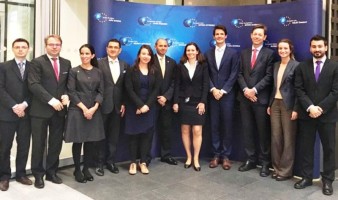
Source: rree.go.cr
Brussels, 08/04/2016 – On 7 April 2016, the first meeting between the European Union and Costa Rica under the Memorandum of Understanding between both parties was held in Brussels. The Vice Minister of Foreign Affairs and Worship of Costa Rica, Mr. Alejandro Solano Ortiz and the Managing Director for the Americas of the European External Action Service (EEAS), Mrs. Edita Hrdá, chaired the delegations of Costa Rica and the European Union respectively. This first meeting of bilateral consultations confirmed the interest in deepening dialogue and cooperation on political, economic and social issues, which has characterised the relations between the European Union and Costa Rica since decades.
The parties had the opportunity to discuss issues of common interest on the international agenda, in different fora, such as the United Nations or the EU-CELAC framework.
They further analysed the current political situation in the EU and Costa Rica and in the Central American, Caribbean and Latin American regions in general.
In particular, the parties reaffirmed their commitment to Central American regional integration and to the Central American Integration System (SICA); they exchanged views on the efforts of the region to further strengthen SICA.
The EU and Costa Rica confirmed their determination to advance bilateral and regional cooperation through the potential of existing Agreements between the EU and Central American countries, such as the Political Dialogue and Cooperation Agreement signed in 2003, transitory to the Association Agreement. To this end, they call upon all signatory EU Member States of the EU-Central America Association Agreement that have not yet ratified it, to do so as soon as possible.. Both parties reaffirm their commitment to the sustainable development of Central American and European societies.
Costa Rica shared information on the progress of its accession process to the OECD, an endeavour strongly supported by the EU.
The parties also explored future possibilities for triangular cooperation, an area with great potential for the development of joint actions.
Finally, the meeting allowed for a valuable exchange and consultation on foreign policy issues, terrorism – expressly condemned – citizen security and human rights, that confirmed the similarity of positions between the EU and Costa Rica. The meeting also provided a useful dialogue on the world drug problem, ahead of the upcoming UN General Assembly Special Session on Drugs (UNGASS 2016), to be held in New York in April 2016.
Both parties agreed to organise the second meeting of bilateral consultations in 2017 in San José de Costa Rica.



