


 SIGN UP FOR OUR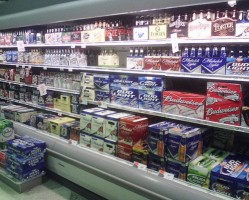
RyanInc; Flickr Commons
The Chairman of the United States Senate Committee on Finance believes that Costa Rica applies a discriminatory excise tax on distilled spirits and alcoholic beverages. For this reason, the Committee is taking a careful look at historical trade agreements so that measures can be taken.
According to an official press release issued by the Committee:
Over the past three decades, the United States has entered into 14 trade agreements with 20 countries. While each of these trade pacts has provided significant economic benefits to American job creators, workers, farmers, innovators, and consumers, there is widespread concern that some of our international trading partners have not fully and faithfully implemented and complied with all of their trade obligations.
The result? Many American stakeholders may not be reaping the full benefits of U.S. trade agreements that aim to boost American exports, promote job growth, and strengthen the economy here at home.
In fact, each year the administration submits a series of mandated reports to Congress, like the National Trade Estimate Report on Foreign Trade Barriers among others, that outline market access barriers, implementation challenges, and compliance concerns with current international trading partners.
These reports show that high-standard trade agreements alone are not enough. The United States must stay vigilant with its oversight to ensure that its trading partners around the globe are upholding their commitments. In the end, Congress can conduct oversight, but only the executive branch can actively enforce trade commitments with our international partners and make sure that these commitments are met prior to entry into force of trade agreements.
With regard to U.S. spirits, the U.S. Treasury keeps the following dossier on Costa Rica:
Costa Rica maintains a specific excise tax system for spirits that is calculated based on the percent of alcohol per liter, with a lower rate per percentage of alcohol on alcoholic beverages that are typically produced locally (Ley 7972). The local spirit, guaro, (which is produced in largest volume by the state-owned alcohol company) is assessed an excise tax of 30 percent alcohol-by-volume (a.b.v.), while the vast majority of internationally traded spirits, such as whiskey and gin, are assessed at a rate of 40 percent a.b.v.
Both imported and domestic beers are subject to the same consumption tax of 0.22332 colones per milliliter. However, imported beer is subject to a 10 percent customs tax while locally produced beer is exempt. U.S. exporters question whether the 10 percent tax is legal under the Costa Rican constitution. Mexican beer manufacturers reportedly won a claim in 2001 that the 10 percent tax was unconstitutional and are therefore now exempt from it. The United States is continuing to follow this issue.
As previously reported by The Costa Rica Star, smuggling of imported liquor has risen sharply at the land borders of our country. Of particular interest is the smuggling of cheap U.S. beers such as Milwaukee’s Best and Old Milwaukee, which are usually purchased on the black market for less than one U.S. dollar.



