


 SIGN UP FOR OUR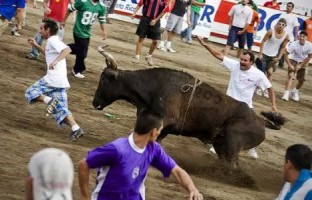
Source: Flickr Commons
A group of activists plans to stage a protest against animal abuse at the Zapote holiday fairgrounds, located in the eastern suburbs of San Jose, on Sunday afternoon. The protesters specifically want to call attention to the holiday events known as “Toros a la Tica,” which are sometimes characterized as bullfights, but they are more of a cross between the running of the bulls in Pamplona and North American rodeos.
The activists are affiliated with the Animal and Earth Resistance Front of Costa Rica, which is not to be confused with the extremist and violent Animal Liberation Front. The protestors will picket in front of the ticketing office at the bullring in Zapote; they would like to spread a message about the suffering that the bulls experience as they are transported, taunted, prodded, pushed, and mounted during these events, which run for about 12 days after Christmas each year.
Although humans are injured far more often than animals at these events, the bulls endure suffering as well. It’s not just that they get irritated; on just about every bullrun, someone gets upset after being tossed around by the bull and walks up to the animal to deliver a swift slap or a punch to the head before walking off the ring while mouthing off expletives. The bull is usually quite confused by this exchange, at least until it is taunted again.
Spanish bullfights date back to the 18th century, and opposition thereof -on the basis of cruelty to animals- emerged at around the same time. Opponents are not limited to animal rights activists; the Catholic Church and politicians have repudiated the events throughout history. Organized opposition against Toros a la Tica on the basis of cruelty are fairly recent. The Animal and Earth Resistance Front has been the most vocal and successful group in this regard. Before this group, biologist Olga María Rodríguez Herrera was the most outspoken.
The Front’s activities started in 2011, and they were successful in drawing the attention of the media to their cause. This group does not buy into the tautology that taurine events in Costa Rica are more humane because they do not involve killing the bull.
About three years ago, the Front was successful in stopping a Pamplona-style bull run from taking place in Costa Rica; they did this by obtaining a ruling from Constitutional Court (Sala Cuarta). What is interesting about this achievement is that the Front enlisted the support of dairy farmers and cattle ranchers in presenting an amicus curiae (friend of the court) brief that explained their position: Taurine events are cruel insofar as animals are not being raised for consumption or as beasts of burden for the purpose of human welfare.
Cattle ranchers and the Front may be strange bedfellows in the fight against taurine cruelty, but they have set an important precedent. They certainly have their work cut out for them: Toros a la Tica is a lucrative industry that is televised nationwide and a major commercial anchor of the holiday festivities in Costa Rica.



