


 SIGN UP FOR OUR
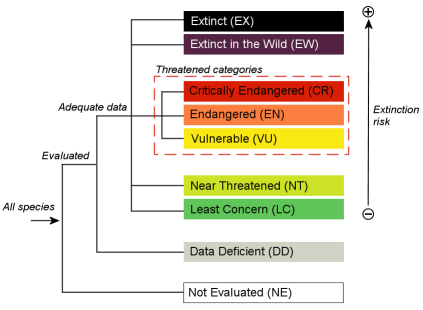
According to a report by the International Union for Conservation of Nature (IUCN) there are 3,812 endangered species of flora and fauna in Costa Rica ranging from those considered Critically Endangered, Endangered, Vulnerable, Extinct and of Least Concern.
The IUCN Global Species Program assesses the conservation status of species, subspecies, varieties and even selected subpopulations on a global scale in order to highlight species threatened with extinction and thereby promote their conservation.
An 8.6% of these are considered in critical danger and vulnerable; 40.5% of them are plants, 18.7% are amphibians and 17.5% are fish. The number of national species registered in the IUCN red list increased by 12% between 2011 and 2015.
The report shows Costa Rica has 73 endemic species, out of which 54.8% are threatened, amphibians are the group with the biggest number of species in this condition.
The IUCN also highlights the fact that in Costa Rica there are 1,118 species that are listed in one of their appendix of the “ Convention on International Trade in endangered species of flora and fauna ”out of which 68.1% are plants.
The groups showing as the least affected are mammals and fresh water crabs.
Reports by the World Wildlife Fund established that the reserves of the Talamanca mountain range, La Amistad and National Park La Amistad, considered as one unit that extends from Costa Rica into Panama, are in high risk due to illegal activities such as mining, the development of hydroelectric dams and the unsustainable use of water resources, all which compromises the integrity of the ecosystems. Another activity that continues to threaten the ecosystems, are wildfires.
The problem with marine resources show that even though efforts have been made and tools have been established to protect these, the problem of unregulated fishing and overfishing continues.
The IUCN site explains: “The IUCN Red List of Threatened Species™ provides taxonomic, conservation status and distribution information on plants, fungi and animals that have been globally evaluated using the IUCN Red List Categories and Criteria. This system is designed to determine the relative risk of extinction, and the main purpose of the IUCN Red List is to catalogue and highlight those plants and animals that are facing a higher risk of global extinction (i.e. those listed as Critically Endangered, Endangered and Vulnerable). The IUCN Red List also includes information on plants, fungi and animals that are categorized as Extinct or Extinct in the Wild; on taxa that cannot be evaluated because of insufficient information (i.e., are Data Deficient); and on plants, fungi and animals that are either close to meeting the threatened thresholds or that would be threatened were it not for an ongoing taxon-specific conservation programme (i.e., are Near Threatened). Plants, fungi and animals that have been evaluated to have a low risk of extinction are classified as Least Concern.



