


 SIGN UP FOR OUR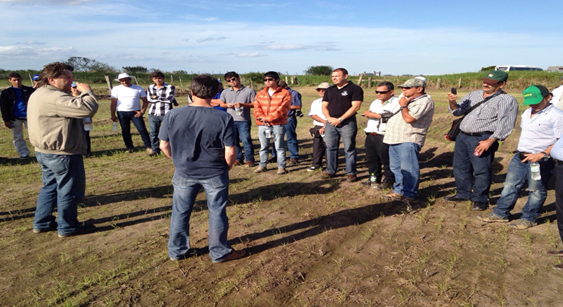
(FILE/ARCHIVE. Photo courtesy of Conarroz.)
Costa Rica’s rice growers are urging President Luis Guillermo Solis against joining the Pacific Alliance, a Latin American trade bloc which currently consists of its four founding member states: Chile, Colombia, Mexico, and Peru.
Costa Rica began the process of accession to become the Alliance’s fifth full member state in 2014 during the administration of former president Laura Chinchilla.
The current administration of president Luis Guillermo Solis however has since postponed incorporation into the alliance, pending consultations by the administration’s economic council.
The Solis administration had previously indicated that it would take a position on the country’s potential membership to the trade bloc by the end of last year, but the administration has stayed mostly quite on the subject.
But this week, business leaders – perhaps expecting a decision by the administration in the near future – have began weighing in on the issue.
“…Costa Rica has a large disadvantage compared to the countries of [the Pacific Alliance], which puts us in a risky situation,” Minor Barboza, chief of Conarroz, which represents Costa Rica’s rice producers, said in an official letter sent to President Solis.
Barboza also noted that several bilateral trade agreements between Costa Rica and each of the Pacific Alliance countries are already in place.
“We are against the country’s membership in the Pacific Alliance trade bloc, considering it a threat to the agricultural sector and the nation’s rice sector,” Barboza states in the communiqué.
On Tuesday, Costa Rica’s National Agriculture Alliance (ANA) urged the administration to permanently abandon any plans to join the trade bloc, saying the deal would put some 500,000 direct and indirect jobs at risk.
Small producers of vegetables, such as cabbage, potatoes, and onions would be especially hard-hit under the terms of the Alliance, agro leaders warned. The further liberalization and tariff removal of trade in sugar and coffee would also harm the sector, producers warn.
Industry and manufacturing in support
On Wednesday, Costa Rica’s industrial and manufacturing leaders came out in support of the pact, saying that the Alliance would expand trade and access to international markets and improve the industrial sector’s competitiveness.
Enrique Egloff, president of the Chamber of Industries of Costa Rica (CICR) told reporters that the time has come for the government and President Luis Guillermo Solis to take a position on the country’s accession to the Alliance, saying that membership would benefit the Costa Rican economy and manufacturing sector.
The CICR argues that membership in the Alliance could provide opportunities for trade growth and would improve the competitiveness of Costa Rica manufacturers through Alliance trade agreements that cover raw materials.
The Alliance
The Pacific Alliance countries have a combined gross national product (GNP) of over $2 trillion, which accounts for 36 percent of the entire GNP of Latin America.
Collectively, the four founding member states (Chile, Colombia, Mexico and Peru) account for 50 percent of Latin America’s trade and 26 percent of its foreign investments, totaling over $70 billion.
Costa Rica’s trade with Alliance countries more than tripled between 2002 and 2012 from US $775 million to more than US $2.2 billion.
In addition to its goals of free trade and economic integration amongst member states, the Pacific Alliance’s other goals include visa-free travel, a common stock exchange and common diplomatic representation.



