


 SIGN UP FOR OUR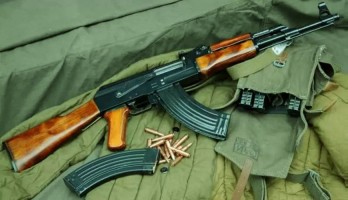
Preferred weapon of guerrilla fighters.
A daily tabloid from Costa Rica and an online publication run by journalists from the United States, Canada and the United Kingdom have recently published troubling reports of guerrillas operating in northern Nicaragua. Although both reports present some discrepancies, they both stress the issue of obfuscation by the Nicaraguan government, thereby leaving the international community in the dark.
Both Diario Extra in Costa Rica and InsightCrime.org seem to agree on the fact that armed groups are operating in the northern mountainous jungles of Nicaragua. What is not entirely clear is whether these paramilitaries intend to topple the struggling regime of President Daniel Ortega, or if these armed groups are just tactical offshoots of the fearsome Maras, the criminal gang born in the prisons and streets of Los Angeles, which has grown into a dangerous regional movement.
Insight Crime specializes in reporting on crime and civil unrest across Latin America and the Caribbean; their reporting on issues of corruption, armed violence and civil unrest in Nicaragua dates back to late 2010. In late October 2013, Charles Parkinson wrote:
Nicaraguan authorities are continuing to refute the political motives of armed actors in the country’s northern highlands, despite the recent assassination of two government activists.
On October 13, ex-army officer and activist for the ruling Sandinista National Liberation Front (FSLN – known as the “Sandinistas”) Trinidad Cano Torres was assassinated on the grounds of his farm near Wiwili, in the northern department of Jinotega. Less than two weeks earlier, Jose Cruz Lopez, the Sandinistas’ leader in a small community 35 miles away, was killed in a similar fashion — gunned down by a handful of men in military fatigues.
This week, Erick Carvajal Mora of Diario Extra filed a report that included an interview with Tigrillo, the nome de guerre chosen by the leader of the Coastal Democratic Front (Spanish initials: FDC). This group claims that they have been spent the last two years engaging the Ortega regime and the Nicaraguan Army:
“In Nicaragua we have been rising up and arming ourselves for two years, and these are news stories that are not published because Daniel Ortega and the [mainstream media] powers that be agree that this story should not be told. They don’t report on what is happening. There is this communist ideology that we want to eradicate. He (Ortega) says that we are armed bandits in the mountains, and that is not true. We are the people trying to turn Nicaragua into a democracy.”
According to Mr. Carvajal, Tigrillo agreed to meet Diario Extra journalists in Paso Canoas, on the southern border with Costa Rica, since he was on a recruiting mission and looking for people in Panama who may be interested in fighting against the Ortega regime. Other details provided by Diario Extra on this operation include:
- The small arms arsenal of this group includes about 10,000 AK-47 assault rifles
- Their guerrilla camps are mostly situated in Waslala, a remote municipality in the North Atlantic Autonomous Region of Nicaragua, as well as in Yali, located in Jinotega.
- The Nicaraguan Army has launched search and destroy operations against guerrilla leaders.
- Two recent engagements against Nicaraguan soldiers left more than 20 casualties, including three guerrilla fighters.
Nicaraguan guerrilla recruiters are in Panama reportedly looking for potential fighters with military experience. As reported by The Costa Rica Star, although Panama formally retired its armed forces a few years ago, their police forces are receiving significant financial and material support from the United States, and Panamanian civil society is complaining that their security forces are becoming extremely militarized. The current logistics involve traveling by road within Panama before returning to Paso Canoas, entering Costa Rica on foot and by clandestine means, and continuing north to Nicaragua.



