


 SIGN UP FOR OUR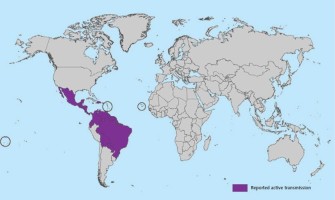
Zika map. Source: CDC
The full case of a 55-year old tourist from the United States, who contracted the Zika virus in Costa Rica, has been published in the Annals of Internal Medicine, a medical journal established in 1927 by the American College of Physicians.
The author of the article is Dr. Lin H. Chen of the Mount Auburn Hospital and Harvard Medical School in Massachusetts. Mount Auburn is a GeoSentinel site, which means that it is part of a worldwide communication and data collection network for the surveillance of travel related morbidity. GeoSentinel was initiated in 1995 by the International Society of Travel Medicine (ISTM) with support from the US Centers for Disease Control (CDC) as a network of ISTM member travel/tropical medicine clinics.
As reported by The Costa Rica Star on February 2nd, a tourist from the United States fell ill with the Zika virus after visiting a yoga retreat in Playa Nosara, province of Guanacaste. The announcement was made by Minister of Public Health Fernando Llorca, who mentioned that the US CDC confirmed the report.
The article by Dr. Chen further identifies the patient as a previously healthy 55-year-old male Massachusetts resident presented to the walk-in clinic at Mount Auburn Hospital in Cambridge, with skin rash, conjunctivitis (pinkeye), and arthralgia (joint pain). The patient spent the holidays in Costa Rica with two family members and reported having endured many mosquito bites.
The fever and skin rash symptoms started prior to New Year’s Eve. The patient was first seen on January 3rd and was referred to the Mount Auburn Hospital Travel Medicine Center on January 7th, which was Day 9 of the Zika illness. He was also screened for chikungunya and dengue. The patient was counseled about the sexual transmission potential of the Zika virus and was advised to practice safe sex.
As of February 8th, the two family members who traveled with the patient were still in Costa Rica. The patient returned to the hospital on January 25th, nearly a month into his illness, and had recovered completely.
Dr. Chen makes an observation about the Zika virus infection not having been documented in Costa Rica until January 26th, the date when the infection in this particular patient was confirmed. There is a comparison to the rapid spread of chikungunya fever a couple of years ago. In conclusion, Dr. Chen writes:
Costa Rica is a popular travel destination and has the Aedes mosquitoes that are also responsible for transmitting dengue and chikungunya viruses. Travelers to all areas where these mosquitoes are present, including Costa Rica, should be advised to avoid day-biting mosquitoes to prevent dengue, Zika, and chikungunya virus infections.
Full article at the Annals of Internal Medicine: http://annals.org/article.aspx?articleid=2492129



